In immediate crisis or experiencing thoughts of suicide or self-harm?
Call or text 988 (Suicide & Crisis Lifeline) — available 24/7, free, confidential.
Call 911 if there is an immediate medical emergency.
Our outpatient treatment facilities deliver structured clinical programming, including Partial Hospitalization (PHP), Intensive Outpatient (IOP), Standard Outpatient (OP), and Virtual IOP for California residents. Our primary outpatient treatment center is at 18101 Magnolia St, Fountain Valley, with supporting outpatient programming at our Pomona Avenue location in Costa Mesa. These facilities house our group therapy rooms, individual counseling spaces, consultation rooms, computer centers (used for Career Development and Academic Pathways programs), and admin offices. View our outpatient treatment locations and access details on the locations hub.
For clients enrolled in outpatient treatment who need stable, structured sober housing during recovery, Asana Recovery offers sober living homes throughout Costa Mesa (Madison Avenue, Johnson Avenue, Center Street) and Huntington Beach (Indian Wells Circle). Our sober living homes feature shared living rooms, full-service kitchens, comfortable bedrooms, outdoor garden spaces, and dining areas — designed to feel like home while reinforcing the structure that supports recovery. Sober living residents attend daily outpatient programming at our Fountain Valley clinical hub and return to a safe, sober environment in the evenings and weekends.
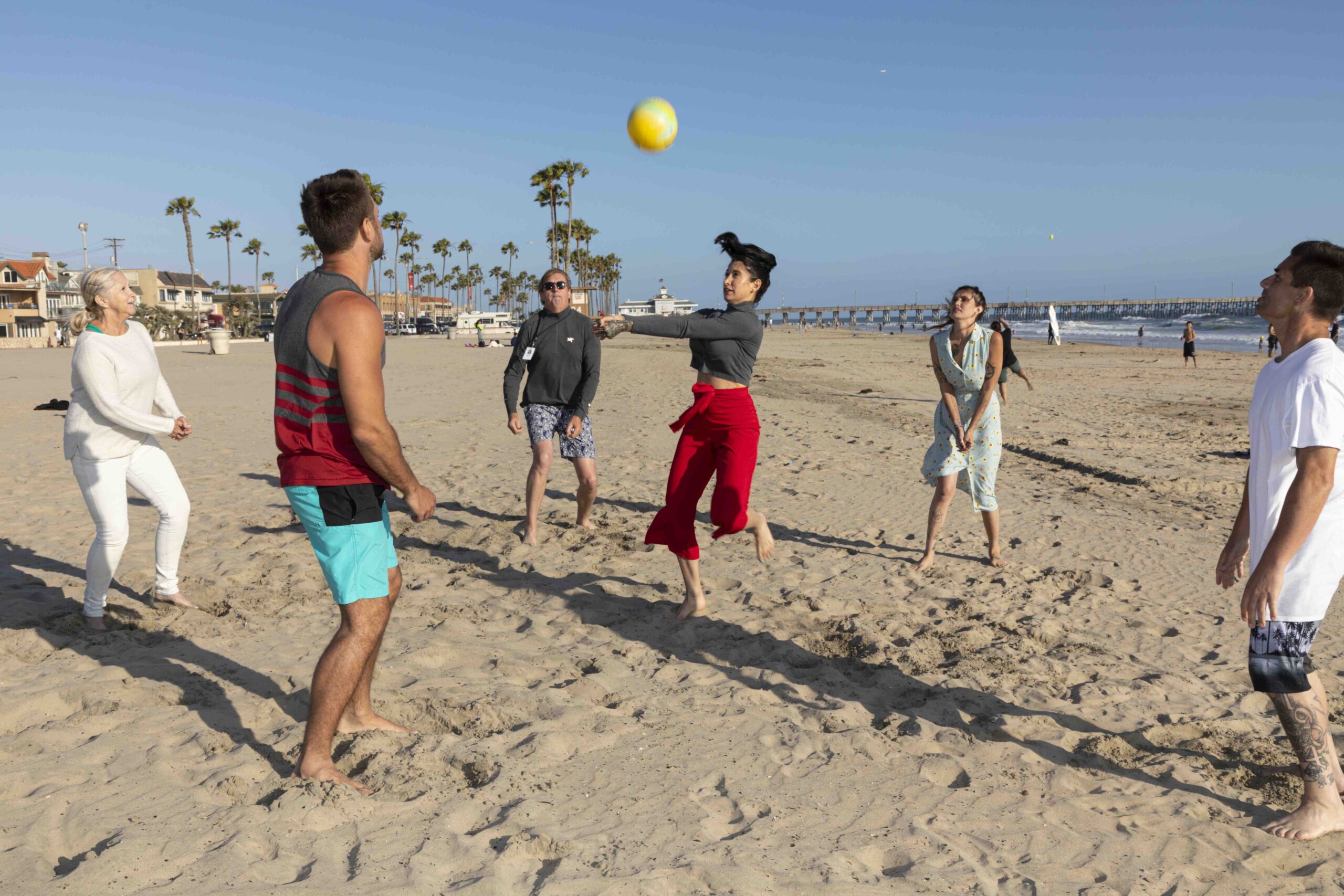
Recovery extends beyond clinical programming. Asana Recovery clients participate in structured local activities that support physical health, build community, and create positive associations with sober living. Activities include local hiking trails, beach days, surfing, group volleyball, team sports, martial arts training, bike rides, gym sessions, and outdoor picnics — all coordinated to support the broader recovery journey alongside our evidence-based outpatient treatment.
Watch video tours of Asana Recovery’s outpatient treatment programs and facilities. Our Partial Hospitalization Program (PHP) operates 5-6 hours daily, 5 days weekly. Our Intensive Outpatient Program (IOP) provides 3 hours per session, 3 days per week (9 hours weekly) with morning, afternoon, and evening scheduling options. Watch how our programs are delivered at our Fountain Valley primary treatment center and at our Huntington Beach location.
Asana Recovery is here to help you or your loved one access structured outpatient addiction and mental health treatment in Orange County. Whether you’re ready to enroll in PHP, IOP, OP, or Virtual IOP for California Residents — or explore sober living options at our Costa Mesa or Huntington Beach homes — our admissions team is available to answer questions, verify your insurance, or schedule an in-person facility tour.


You could save up to 100% of your treatment using your Insurance.
By submitting this form, I agree to Asana Recovery's Privacy Policy and consent to receive calls, texts, and emails about insurance benefits, treatment options, admissions, and related services. I authorize Asana Recovery to use and disclose my PHI for these communications, including by text and email, and understand these methods may not be fully secure. Msg/data rates may apply. Msg frequency may vary. Consent is not required for treatment. Reply STOP to opt out.
Free, confidential, and no obligation. Get your insurance verified by our admissions team.
Asana Recovery
We firmly believe that the internet should be available and accessible to anyone, and are committed to providing a website that is accessible to the widest possible audience, regardless of circumstance and ability.
To fulfill this, we aim to adhere as strictly as possible to the World Wide Web Consortium’s (W3C) Web Content Accessibility Guidelines 2.1 (WCAG 2.1) at the AA level. These guidelines explain how to make web content accessible to people with a wide array of disabilities. Complying with those guidelines helps us ensure that the website is accessible to all people: blind people, people with motor impairments, visual impairment, cognitive disabilities, and more.
This website utilizes various technologies that are meant to make it as accessible as possible at all times. We utilize an accessibility interface that allows persons with specific disabilities to adjust the website’s UI (user interface) and design it to their personal needs.
Additionally, the website utilizes an AI-based application that runs in the background and optimizes its accessibility level constantly. This application remediates the website’s HTML, adapts Its functionality and behavior for screen-readers used by the blind users, and for keyboard functions used by individuals with motor impairments.
If you’ve found a malfunction or have ideas for improvement, we’ll be happy to hear from you. You can reach out to the website’s operators by using the following email
Our website implements the ARIA attributes (Accessible Rich Internet Applications) technique, alongside various different behavioral changes, to ensure blind users visiting with screen-readers are able to read, comprehend, and enjoy the website’s functions. As soon as a user with a screen-reader enters your site, they immediately receive a prompt to enter the Screen-Reader Profile so they can browse and operate your site effectively. Here’s how our website covers some of the most important screen-reader requirements, alongside console screenshots of code examples:
Screen-reader optimization: we run a background process that learns the website’s components from top to bottom, to ensure ongoing compliance even when updating the website. In this process, we provide screen-readers with meaningful data using the ARIA set of attributes. For example, we provide accurate form labels; descriptions for actionable icons (social media icons, search icons, cart icons, etc.); validation guidance for form inputs; element roles such as buttons, menus, modal dialogues (popups), and others. Additionally, the background process scans all the website’s images and provides an accurate and meaningful image-object-recognition-based description as an ALT (alternate text) tag for images that are not described. It will also extract texts that are embedded within the image, using an OCR (optical character recognition) technology. To turn on screen-reader adjustments at any time, users need only to press the Alt+1 keyboard combination. Screen-reader users also get automatic announcements to turn the Screen-reader mode on as soon as they enter the website.
These adjustments are compatible with all popular screen readers, including JAWS and NVDA.
Keyboard navigation optimization: The background process also adjusts the website’s HTML, and adds various behaviors using JavaScript code to make the website operable by the keyboard. This includes the ability to navigate the website using the Tab and Shift+Tab keys, operate dropdowns with the arrow keys, close them with Esc, trigger buttons and links using the Enter key, navigate between radio and checkbox elements using the arrow keys, and fill them in with the Spacebar or Enter key.Additionally, keyboard users will find quick-navigation and content-skip menus, available at any time by clicking Alt+1, or as the first elements of the site while navigating with the keyboard. The background process also handles triggered popups by moving the keyboard focus towards them as soon as they appear, and not allow the focus drift outside it.
Users can also use shortcuts such as “M” (menus), “H” (headings), “F” (forms), “B” (buttons), and “G” (graphics) to jump to specific elements.
We aim to support the widest array of browsers and assistive technologies as possible, so our users can choose the best fitting tools for them, with as few limitations as possible. Therefore, we have worked very hard to be able to support all major systems that comprise over 95% of the user market share including Google Chrome, Mozilla Firefox, Apple Safari, Opera and Microsoft Edge, JAWS and NVDA (screen readers).
Despite our very best efforts to allow anybody to adjust the website to their needs. There may still be pages or sections that are not fully accessible, are in the process of becoming accessible, or are lacking an adequate technological solution to make them accessible. Still, we are continually improving our accessibility, adding, updating and improving its options and features, and developing and adopting new technologies. All this is meant to reach the optimal level of accessibility, following technological advancements. For any assistance, please reach out to